
Meta Description: Looking for a custom multi-branch wire harness? Explore cable routing, connector options, protective sleeving and OEM wire harness solutions for industrial and electronic equipment.
Primary Keyword: custom multi-branch wire harness
Secondary Keywords:
- custom wire harness
- multi-branch wire harness
- custom cable assembly
- wire harness assembly
- multi-branch cable assembly
- custom wiring harness
- electrical wire harness
- sleeved wire harness
- OEM wire harness manufacturer
- custom wire assembly
- cable harness manufacturer
- custom wiring assembly
What Is a Custom Multi-Branch Wire Harness?
A custom multi-branch wire harness is an electrical wiring assembly that combines multiple wires, connector interfaces and branch routes into one organized unit.
Instead of installing several loose wires individually, equipment manufacturers can use a preconfigured harness designed around their electrical layout and installation requirements.
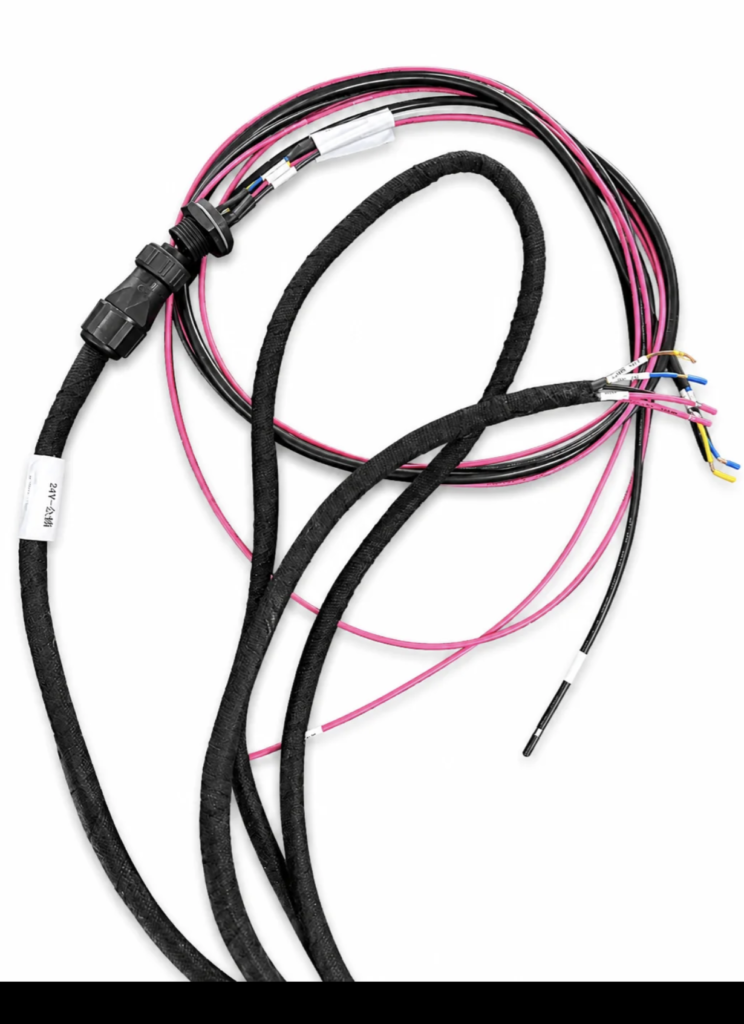
The product shown in the image is a good example of this type of assembly. It features multiple colored wires, a protective outer sleeve, a connector interface and several individual wire branches.
Depending on the application, a custom wire harness can be designed with different wire lengths, connector types, branch positions, wire colors and protective materials.
From a manufacturing perspective, I see the main benefit as getting the wiring layout right before the equipment reaches the final assembly stage. When the cable routing and connections are planned in advance, installation can become more organized and repeatable.
Key Components of a Multi-Branch Wire Harness
A custom wire harness is made up of several components. Each one needs to match the requirements of the finished equipment.
1. Electrical Wires
The wires carry power or electrical signals between different components.
Depending on the design, a harness may use multiple wire colors to distinguish individual circuits. In the pictured assembly, pink and black wires are visible, along with additional colored wire ends.
Wire gauge, conductor material, insulation and length should be specified according to the electrical load, signal requirements and installation environment.
2. Protective Sleeving
The main cable section in the image is covered with black protective sleeving.
Protective sleeving can help organize wires and reduce exposure to abrasion during installation or operation. The appropriate material depends on factors such as flexibility, temperature, chemical exposure and mechanical wear.
Common options include:
- Braided sleeving
- Expandable protective sleeving
- Spiral wrapping
- Corrugated tubing
- Fabric cable wrapping
- Heat-shrink tubing
Not every project needs the same protection. The goal is to choose a material that suits the actual routing path and working environment.
3. Connectors
Connectors provide the electrical interfaces between the harness and the equipment.
The pictured assembly includes a circular locking-style connector. Its exact series and specifications cannot be confirmed from the photograph alone.
For a custom project, the connector should be selected based on the mating interface, pin count, terminal type, locking method and environmental requirements.
4. Branch Wires and Terminations
The harness has multiple wire ends extending from the main assembly. These branches can connect to different components within the same system.
Each branch may require a specific length, wire color, terminal or termination method.
My recommendation is to define the branch layout before production. It is much easier to confirm wire routing and connection points using a drawing or sample than to correct an unsuitable harness after the equipment has been assembled.
Custom Multi-Branch Wire Harness Specifications
The following table outlines the main parameters that can be specified for this product category.
| Specification | Available Options |
|---|---|
| Product Type | Multi-Branch Wire Harness |
| Wire Configuration | Multiple wires / branched layout |
| Wire Gauge | Customized according to application |
| Conductor Material | Copper / Tinned Copper |
| Wire Colors | Pink, Black and other custom colors |
| Cable Length | Customized |
| Branch Length | Customized |
| Connector Type | Circular connector / Other specified connectors |
| Connector Pin Configuration | Based on approved drawing |
| Protective Covering | Braided sleeve / Wrap / Other options |
| Wire Termination | Stripped / Crimped / Tinned / Connectorized |
| Wire Identification | Color coding / Labels / Marking |
| Electrical Testing | Continuity / Pinout verification / Other specified tests |
| Packaging | Bulk / Individual / OEM packaging |
These are configurable parameters, not verified specifications for the pictured sample. Actual materials, dimensions, connector models and electrical ratings should be confirmed before publication or production.
Why Choose a Custom Wire Harness Instead of Loose Wires?
For equipment manufacturers, loose wires can create more work during final assembly.
Each wire may need to be measured, routed, identified and connected separately. As the number of connections increases, managing the wiring becomes more complicated.
A custom wire harness brings those connections together into a predefined assembly.
More Organized Cable Routing
A planned harness keeps related wires grouped together and helps establish a consistent routing path.
This is especially useful when equipment contains multiple electrical connections in a limited space.
Easier Installation
With connector positions and branch lengths specified in advance, assembly technicians can install the harness according to the approved design.
This can reduce repetitive wiring work and make installation more consistent.
Better Wire Identification
Color coding and optional labels can help distinguish circuits and connection points.
For complex assemblies, wire identification should follow the customer’s wiring diagram or approved specification rather than relying on color alone.
Repeatable OEM Production
Once a harness design has been confirmed, the same configuration can be used for repeat orders.
For OEM manufacturers, this helps standardize cable length, connector selection, wire routing and termination requirements across production batches.
What Should You Consider When Designing a Multi-Branch Wire Harness?
A harness may look straightforward in a product photo, but the design needs to account for the equipment it will be installed in.
Here are the main factors I would review before finalizing a design.
Wire Gauge and Electrical Requirements
Wire gauge affects electrical resistance, voltage drop and heat generation.
The correct size depends on the current or signal requirements, cable length, conductor material, insulation and operating conditions.
For a mixed power-and-signal harness, different branches may require different wire specifications.
Branch Length and Routing
Branch length should be based on the distance between the main cable route and each connection point.
A branch that is too short may put tension on the connector. Excessively long branches can create clutter or interfere with nearby components.
I recommend checking the harness against the actual equipment layout whenever possible.
Connector Compatibility
The connector must match the mating component.
Before ordering, confirm the connector model or provide a drawing, part number, clear photograph or physical sample. Pin count alone is not enough to guarantee compatibility.
Protective Sleeving
The right protective covering depends on the installation environment.
For example, a harness routed through moving equipment may have different flexibility and abrasion requirements from one installed inside a stationary electronic enclosure.
Pinout and Circuit Mapping
For a multi-branch assembly, every wire needs to connect to the intended terminal or pin.
An approved wiring diagram or pin-to-pin table is particularly useful when the harness contains several connectors or multiple branches.
Practical advice: confirm the connector interface, branch layout and pinout before approving the production sample. These details are often more difficult to correct later than the overall cable length.
Applications of Custom Multi-Branch Wire Harnesses
Multi-branch wire harnesses are used wherever several electrical connections need to be organized into one assembly. The exact applications depend on the connector system, wire specifications and environmental requirements.
Industrial Equipment
Industrial equipment often contains sensors, controllers, switches and other electrical components.
A custom harness can group their connections into a defined layout, making installation and maintenance more manageable.
Electronic Equipment
Electronic products may require several internal connections within a compact enclosure.
Custom wire harnesses can be designed around the available space, connector positions and circuit layout.
Control Systems
Control panels and equipment modules may need multiple power, signal and control connections.
A predefined harness can help organize these circuits and support consistent assembly.
Automotive and Mobility Equipment
Some automotive and mobility applications require branched wiring assemblies that connect different modules or components.
The harness must be designed according to the applicable vibration, temperature, electrical and environmental requirements.
Robotics and Automation
Robotic systems may require wiring that follows specific routes around mechanical structures.
Cable flexibility, branch positioning, strain relief and protection become particularly important when the harness is installed near moving parts.
These are potential application categories for this product type, not confirmed end uses of the exact pictured assembly.
Customization Options for OEM Wire Harness Projects
One of the main advantages of working with a custom wire harness manufacturer is the ability to configure the assembly around the equipment rather than adapting the equipment to a standard cable.
Common customization options include:
Wire configuration
- Number of wires
- Wire gauge
- Wire color
- Individual wire length
- Main cable length
- Branch quantity and position
Connector configuration
- Connector type and model
- Pin count
- Connector orientation
- Mating interface
- Connector position
- Mixed connector combinations
Protection and identification
- Protective sleeving
- Heat-shrink tubing
- Labels and wire markers
- Cable identification
- Strain relief
- Customized packaging
Not every combination is suitable for every connector or cable type, so the final configuration should be reviewed against the application requirements.
How Is a Custom Wire Harness Manufactured?
Although the exact process depends on the harness design, a typical manufacturing workflow includes the following steps.

1. Wire Cutting and Stripping
Wires are cut to the specified lengths, and insulation is removed according to the selected terminal or connector requirements.

2. Terminal Processing
Terminals are crimped or otherwise terminated according to the approved design and applicable process requirements.

3. Connector Assembly and Branch Routing
Wires are inserted into the specified connector positions and organized according to the harness layout.

4. Protective Sleeving and Identification
The harness receives its specified sleeving, labels, heat-shrink protection or other finishing features.

5. Electrical Testing and Final Inspection
Appropriate checks can include continuity, pinout, connector position, branch length and visual inspection. Additional tests depend on the approved specification.
For a manufacturer website, your own production photographs are preferable to generic factory imagery because they show customers the actual manufacturing process and capabilities.
What I’ve Learned From Custom Wire Harness Projects
One thing I would emphasize in a custom wiring project is that the harness needs to fit the equipment as a complete system.
Choosing a connector and wire color is only part of the job. Branch lengths, pin assignments, protection and the routing path all affect the final result.
For example, two harnesses may look almost identical in a photograph but have completely different pin assignments. They should never be treated as interchangeable without checking the electrical configuration.
For that reason, I recommend confirming three things before moving to volume production:
- Mechanical fit: Do the connectors mate correctly, and does the harness follow the intended routing path?
- Electrical configuration: Do the pin assignments and wire connections match the approved drawing?
- Production consistency: Can the approved design be reproduced consistently across repeat orders?
A properly documented sample makes these checks easier and gives both the manufacturer and customer a clearer reference for future orders.
What Information Should You Send to a Wire Harness Manufacturer?
You don’t always need a complete engineering drawing to start a custom project. A physical sample or clear connector photographs can also help establish the initial requirements.
For a quotation, prepare as much of the following information as possible:
- Product application
- Number of wires and branches
- Wire gauge and color
- Main cable length
- Individual branch lengths
- Connector part numbers or photographs
- Pinout or wiring diagram
- Protective sleeving requirements
- Electrical and environmental requirements
- Estimated order quantity
- Sample or drawing, if available
The more clearly the requirements are defined, the easier it is to evaluate the design, identify missing information and prepare an accurate quotation.
How to Choose a Custom Wire Harness Manufacturer
Price matters, but it should not be the only consideration when sourcing a custom wire harness.
I would also look at the supplier’s ability to manage the technical details of the assembly.
Connector and pinout control: The supplier should be able to work from connector specifications, wiring diagrams or approved samples.
Wire processing: Cutting, stripping and terminal processing should follow the defined requirements.
Protection and routing: The manufacturer should understand how sleeving, branch length and cable layout affect installation.
Testing and inspection: Ask which electrical and visual checks are included, and whether additional tests are required for your application.
Sample approval: Confirm the design and sample before moving to repeat production.
OEM support: A capable supplier should be able to discuss customization, documentation, packaging and repeat-order consistency.
For a manufacturer supplying overseas customers, clear technical communication is just as important as the production process.
Frequently Asked Questions
What is a multi-branch wire harness?
A multi-branch wire harness is an electrical assembly that groups multiple wires into a main cable route with separate branches leading to different connection points.
Can a wire harness have different wire colors?
Yes. Wire colors can be selected according to the wiring design and identification requirements. The final color arrangement should be documented so that production and inspection follow the same specification.
Can the protective sleeving be customized?
Yes. Depending on the application, options may include braided sleeving, fabric wrapping, corrugated tubing, spiral wrap or other protective materials.
Can connector types and branch lengths be customized?
Yes. Connector selection, branch position, main cable length and individual branch lengths can generally be configured according to the approved design and available components.
What is the difference between a wire harness and a cable assembly?
The terms overlap in the industry. A cable assembly often describes a finished cable with connectors or terminations, while a wire harness commonly refers to a more organized arrangement of multiple wires and branches. The exact terminology varies by manufacturer and application.
Can a manufacturer build a harness from a sample?
A physical sample can be a useful starting point. However, the manufacturer should confirm the connector details, wire specifications and pinout before production, rather than assuming that every feature can be identified from appearance alone.
Final Thoughts
A custom multi-branch wire harness is more than a group of wires bundled together. It is a wiring solution designed to connect multiple points within a piece of equipment in a defined, repeatable way.
The right combination of wire specifications, connectors, branch lengths and protective sleeving can make installation more organized and help OEM manufacturers standardize their assemblies.
If you’re sourcing a custom multi-branch wire harness, sleeved wire harness or OEM cable assembly, start with the wiring layout, connector requirements and equipment installation space. These details provide a much better foundation for a successful custom project than selecting a cable based on appearance alone.
Looking for a custom wire harness for your equipment? Share your drawing, sample, connector details or basic requirements to discuss a suitable configuration and request a quotation.