
SEO Meta Title
Ring Terminal Wire Assembly | Custom Cable & Wire Assembly
Meta Description
Learn about ring terminal wire assemblies, including wire, terminal and insulation options for battery, automotive, grounding and industrial applications.
Primary Keyword
ring terminal wire assembly
Secondary Keywords
- custom ring terminal wire assembly
- ring terminal cable assembly
- ring terminal wiring harness
- pre-crimped wire assembly
- ring lug wire assembly
- custom wire assembly manufacturer
- battery wire assembly
- battery cable assembly
- crimped wire assembly
- custom cable assembly
- OEM wire assembly
Ring Terminal Wire Assembly: Specifications, Applications & Custom Options
If you’ve ever had to connect a wire to a battery, grounding point, electrical cabinet, or piece of industrial equipment, you’ve probably seen a ring terminal.
The concept is simple: a wire is terminated with a ring-shaped metal terminal that can be secured with a screw, bolt, or threaded stud.
But when you’re building equipment in production, there’s a big difference between buying loose wire and terminals and receiving a finished ring terminal wire assembly.
With a pre-assembled cable, the wire length, gauge, terminal size, insulation, and crimping are already defined. The assembly can be installed directly instead of being cut, stripped, and crimped during final production.
From my experience with wire assembly projects, the ring terminal itself is rarely the complicated part. The important details are usually the wire size, terminal hole diameter, finished length, crimp quality, and how the assembly will actually be installed.
This guide takes a practical look at ring terminal wire assemblies, including their specifications, applications, customization options, and what to consider when ordering them.
What Is a Ring Terminal Wire Assembly?
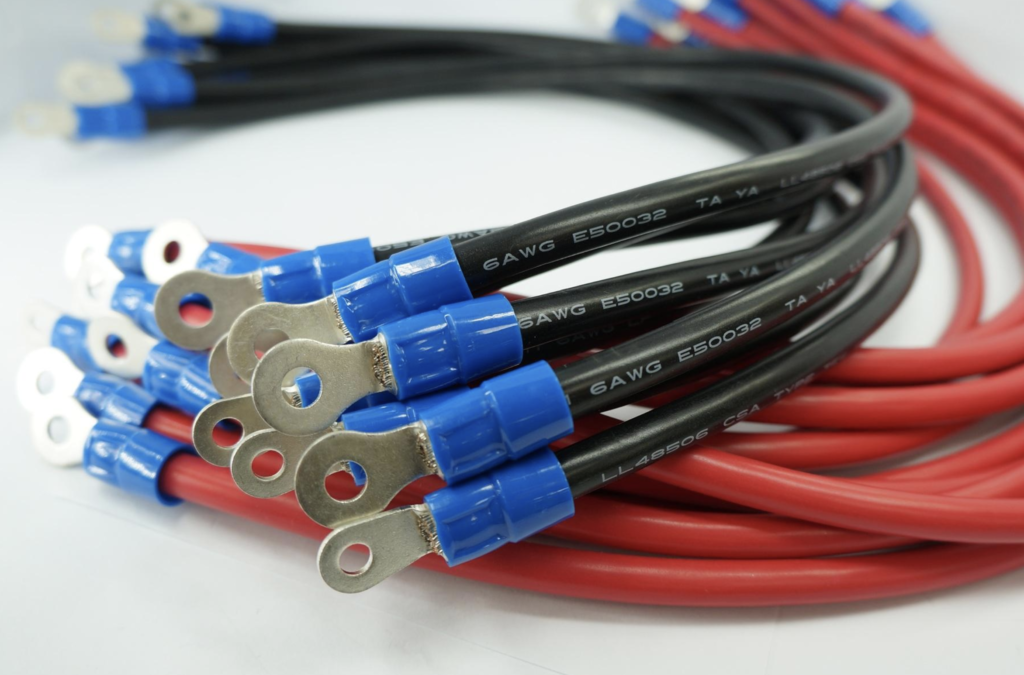
A ring terminal wire assembly is a pre-assembled electrical wire with a ring terminal securely attached to one or both ends.
The wire carries the electrical current, while the ring terminal provides a mechanical connection point for a screw, bolt, or threaded stud.
The terminal is normally attached to the stripped end of the wire through a crimping process.
Depending on the application, the crimped area can also be covered with an insulation sleeve or heat-shrink tubing for additional protection.
A typical assembly includes:
- Insulated electrical wire
- Ring terminal
- Crimped connection
- Insulation sleeve or heat-shrink tubing
The basic design is straightforward, but that simplicity is one of the reasons ring terminal assemblies are used across so many electrical systems. Your connection point is clearly defined, and the finished wire can be installed without performing the basic termination work again.
Ring Terminal Wire Assembly Specifications
One of the main advantages of a custom ring terminal wire assembly is that the specifications can be built around the actual application.
The most common parameters include:
| Specification | Available Options |
|---|---|
| Wire Type | Insulated electrical wire |
| Wire Color | Red, black, yellow, blue, customized colors |
| Wire Gauge | Customized according to application requirements |
| Wire Length | Custom lengths |
| Conductor | Copper or tinned copper |
| Insulation | PVC, XLPE, silicone and other options |
| Terminal Type | Ring terminal / ring lug |
| Terminal Hole Size | Customized |
| Terminal Material | Copper or copper alloy |
| Terminal Plating | Tin-plated or customized |
| Connection | Crimped |
| Protection | Insulation sleeve or heat-shrink tubing |
| Assembly | Single-ended or double-ended |
| Customization | OEM / ODM |
The actual electrical rating, temperature rating, and applicable wire gauge need to be determined from the conductor, insulation, terminal, and application requirements—not simply from the appearance of the finished cable. Your original specification sheet also makes this distinction.
The Main Components of a Ring Terminal Wire Assembly
A ring terminal assembly may look simple from the outside, but several components work together to create the finished connection.
1. Insulated Electrical Wire
The wire is the primary conductive component.
Different wire gauges can be selected according to the required current, voltage, available installation space, and operating conditions.
Wire length can also be customized.
This is particularly useful when the cable has to follow a specific route inside equipment. Instead of leaving extra cable to be bundled up later, you can specify a finished length closer to the actual installation requirement.
2. Ring Terminal
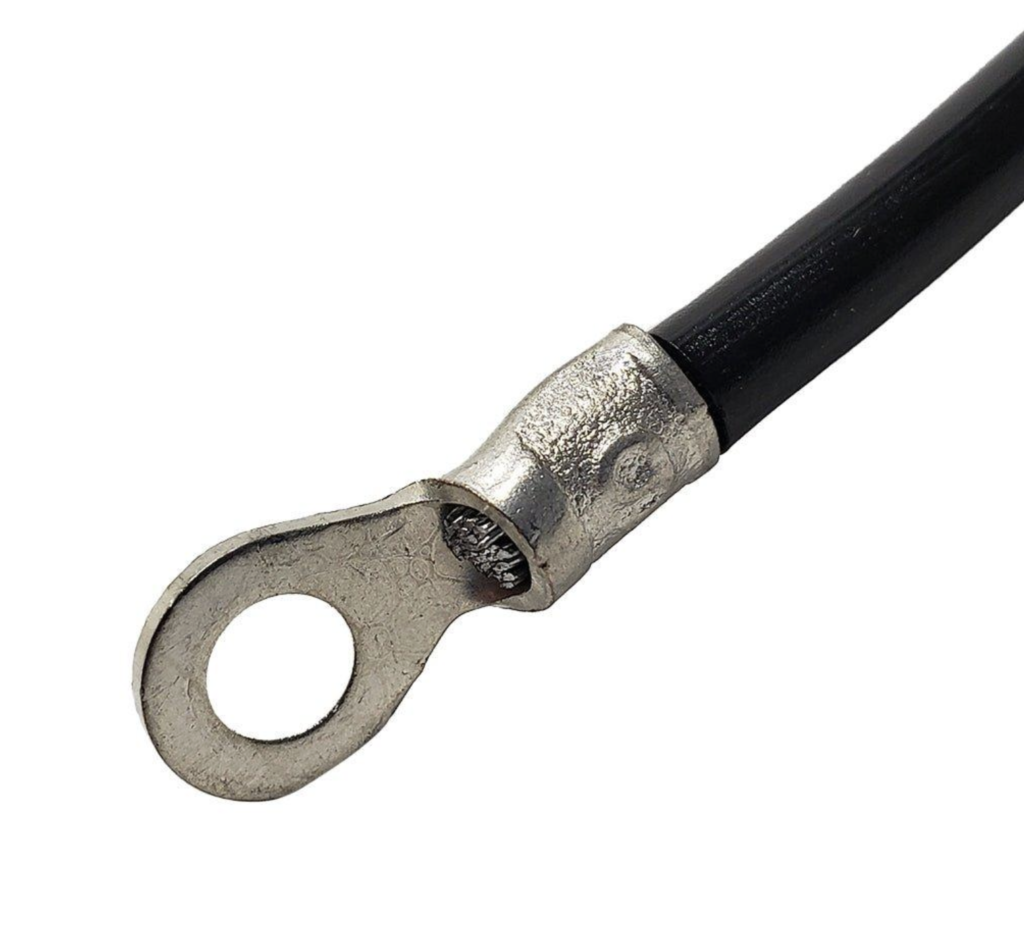
The ring terminal provides the mechanical connection point.
Unlike an open-ended terminal, the closed ring design stays around the fastening point once the screw, bolt, or stud is installed.
Ring terminals are available with different hole diameters and dimensions to match different mounting hardware.
One detail I always recommend checking first:
What size is the mounting stud or screw?
It sounds obvious, but the terminal hole is one of those small details that can stop an otherwise correct assembly from fitting.
The terminal needs to match the mounting hardware, while its wire barrel needs to match the selected conductor size.
3. Crimped Connection
The terminal is attached to the conductor through a crimping process.
A properly controlled crimp creates both electrical and mechanical contact between the wire and terminal.
For production quantities, controlled crimping equipment and inspection procedures can help maintain consistency from one assembly to the next.
This is especially important when you’re ordering the same wire assembly repeatedly for an OEM production line.
4. Insulation Protection
An insulation sleeve or heat-shrink tube can be added around the wire-to-terminal connection.
Depending on the application, this can help:
- Improve electrical insulation
- Protect the crimped area
- Reduce mechanical stress
- Improve strain relief
- Give the finished assembly a cleaner appearance
Not every ring terminal assembly needs the same level of protection, so this should be specified according to the actual installation environment.
Where Are Ring Terminal Wire Assemblies Used?
Ring terminal wire assemblies are useful anywhere a wire needs to be securely attached to a threaded electrical connection.
They are particularly common in battery, automotive, grounding, industrial, and electrical equipment applications.
Automotive Wiring
Automotive electrical systems contain many bolted and stud-based connections.
Ring terminal assemblies can be used for:
- Ground connections
- Battery connections
- Power distribution
- Electrical accessories
- Lighting systems
- Control circuits
For automotive applications, the final design needs to take into account the electrical load, installation space, vibration, temperature, and connection method.
Battery Connections
Battery systems are another common application.
A ring terminal can provide a secure connection between a wire and a battery terminal or other fastening point.
The terminal hole size and wire gauge should be selected according to the battery terminal and electrical requirements.
For battery projects, I would not recommend choosing the cable simply by looking at the outside diameter.
The conductor size, terminal specification, cable length, and operating conditions all matter.
Grounding Applications
Ring terminal wires are also commonly used for grounding.
They can be installed in:
- Electrical equipment
- Control cabinets
- Industrial machinery
- Power equipment
- Other grounding systems
The ring terminal allows the wire to be secured directly to a designated grounding point.
Industrial Equipment
Industrial machinery often contains a large number of internal electrical connections.
Typical applications include:
- Control panels
- Industrial machines
- Power equipment
- Electrical cabinets
- Automation equipment
- Test equipment
For equipment manufacturers, pre-assembled wiring can be particularly useful because the same cable configuration can be reproduced across production batches.
Instead of asking assembly workers to measure, strip, and crimp individual wires every time, the finished assembly arrives ready to install.
Why Use a Custom Ring Terminal Wire Assembly?
You might reasonably ask:
Why not just buy wire and terminals separately?
For prototypes or occasional repairs, that may be perfectly practical.
But for repeat production, the situation is different.
A custom ring terminal wire assembly can provide several practical benefits.
Customized Wire Length
The manufacturer can produce the wire according to the required finished length.
This can reduce excess cable inside the equipment and make installation easier.
Customized Terminal Size
The ring terminal can be selected according to the required mounting hole and fastening hardware.
This is particularly important when the assembly needs to fit an existing bolt, screw, or stud.
Consistent Assembly
Factory-produced assemblies can provide more consistent:
- Wire stripping
- Crimping
- Terminal positioning
- Insulation
- Finished dimensions
For OEM production, consistency is often more valuable than simply reducing the price of one individual wire.
Simplified Installation
The customer receives a ready-to-install assembly instead of loose wire and terminals.
That means less manual processing during final assembly.
And when you’re building the same equipment repeatedly, eliminating small manual steps can make the overall production process much easier to manage.
How to Choose the Right Ring Terminal Wire Assembly
There are several specifications I would confirm before ordering.
1. Wire Gauge
Select the appropriate wire gauge according to the required current and application conditions.
Don’t choose the gauge simply because it is commonly used in similar products.
The actual electrical requirements should come first.
2. Wire Length
The finished wire length should match the installation requirements while leaving enough length for routing and connection.
If the cable runs through a piece of equipment, it is worth checking the actual routing path rather than measuring only the straight-line distance.
3. Terminal Hole Size
The ring terminal hole needs to match the screw, bolt, or stud used for installation.
This is one of the easiest specifications to overlook and one of the easiest problems to prevent.
4. Conductor Material
Copper and tinned copper are common conductor options.
The appropriate choice depends on the electrical and environmental requirements of the application.
5. Insulation Material
The insulation should be selected according to:
- Operating temperature
- Voltage requirements
- Flexibility
- Environmental conditions
- Mechanical requirements
PVC, XLPE, silicone, and other materials may be considered depending on the application.
6. Terminal Material and Plating
Terminal material and surface treatment can also be selected according to electrical performance, corrosion resistance, and environmental requirements.
Depending on the application, copper or copper-alloy terminals with tin plating may be used.
The exact material and plating should be confirmed against the actual product specification.
Custom Ring Terminal Wire Assembly: What Can Be Customized?
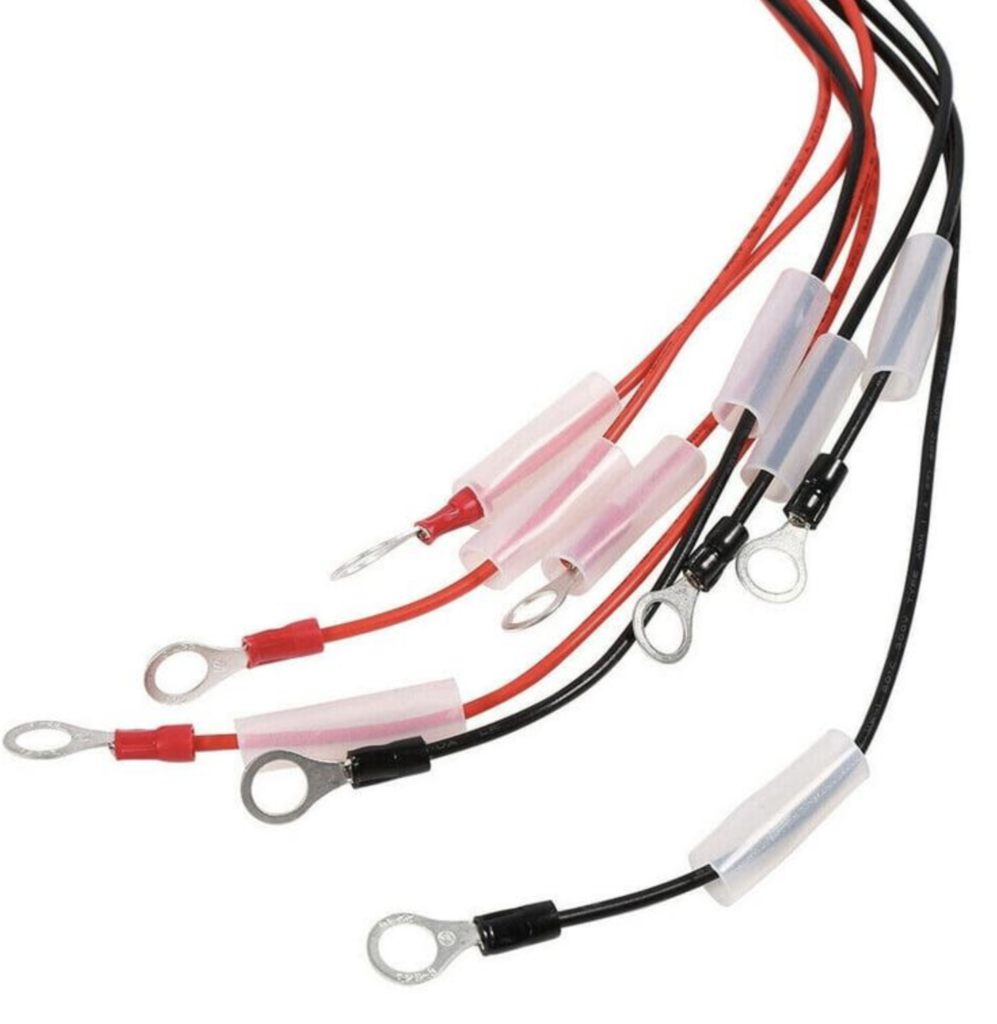
For OEM projects, the ring terminal assembly can be configured around the customer’s actual equipment and installation requirements.
Common customization options include:
- Wire gauge
- Wire length
- Wire color
- Terminal type
- Terminal hole diameter
- Terminal material
- Terminal plating
- Insulation material
- Heat-shrink tubing
- Wire stripping length
- Single-ended or double-ended terminals
- Packaging requirements
Customers can provide a drawing, sample, BOM, or technical specification for the manufacturer to review.
The original product specification also identifies these as typical customization items for OEM projects.
What I’ve Learned From Ring Terminal Wire Assembly Projects
From a manufacturing perspective, ring terminal assemblies are one of those products that look simple until you start dealing with production quantities.
The basic product may only contain a wire and a terminal, but small dimensional differences can affect whether the assembly actually works in the equipment.
For example, I’ve found that the following questions are often more important than customers initially expect:
What is the exact finished length?
What is the mounting hole diameter?
What wire gauge is required?
Does the terminal need heat-shrink protection?
Is the terminal installed on one end or both ends?
How should the finished assembly be tested?
Getting these details right before production is usually much easier than correcting them after hundreds or thousands of assemblies have already been made.
My practical advice:
Don’t specify only the wire. Specify the complete connection.
A good ring terminal wire assembly is not just about choosing the correct cable. The wire, terminal, crimp, insulation, length, and mounting interface all need to work together.
Ring Terminal Wire Assembly vs. Loose Wire and Terminal
The difference is fairly straightforward.
With loose wire and terminals, the final assembly work is performed by the customer.
That typically means:
Cut → Strip → Position → Crimp → Inspect → Install
With a pre-assembled ring terminal wire, much of that work has already been completed.
The customer can receive:
Finished wire assembly → Install
For a production environment, that can make a meaningful difference.
It can also help standardize the wiring process between different production batches or assembly operators.
Custom Ring Terminal Wire Assembly Manufacturer
When choosing a custom ring terminal wire assembly manufacturer, I recommend looking beyond the basic unit price.
For OEM and production projects, it is useful to confirm whether the manufacturer can support:
- Required wire gauges
- Custom cable lengths
- Ring terminal sizes
- Terminal materials
- Plating options
- Insulation materials
- Heat-shrink protection
- Controlled crimping
- Electrical testing
- Quality inspection
- Packaging requirements
- Production quantities
If you already have a drawing, sample, BOM, or existing assembly, send that information along with the inquiry.
A clear drawing or physical sample can often save more time than a long email explaining the product.
For a manufacturer, the goal should be to understand the actual connection and application, not just the product name.
Frequently Asked Questions
What is a ring terminal wire assembly?
A ring terminal wire assembly is an electrical wire with a ring-shaped terminal crimped onto one or both ends. It is used to create a secure electrical connection with screws, bolts, or threaded studs.
Can the wire length be customized?
Yes. Wire length is one of the most common customization options for ring terminal wire assemblies.
Can different terminal hole sizes be provided?
Yes. Ring terminal sizes can be selected according to the mounting screw, bolt, or stud.
Can the wire color be customized?
Yes. Depending on production requirements, red, black, yellow, blue, and other colors can be supplied.
Can ring terminal wires be used for battery connections?
Yes, depending on the wire gauge, terminal specification, and electrical requirements of the battery application.
Can a manufacturer produce OEM ring terminal wire assemblies?
Yes. Custom assemblies can be manufactured according to customer drawings, samples, BOMs, and technical specifications.
Final Thoughts
A ring terminal wire assembly is a relatively simple product, but getting the details right matters.
The wire gauge, finished length, terminal hole size, conductor, insulation, crimp, and mounting method all need to work together.
For a single repair job, assembling the wire yourself may be perfectly reasonable.
For OEM equipment or repeat production, a pre-assembled solution can simplify installation, improve consistency, and reduce manual wiring work.
Whether you’re working on automotive wiring, battery connections, grounding systems, industrial equipment, control panels, or other electrical applications, a properly specified ring terminal wire assembly can be built around the actual requirements of the equipment.
If you’re looking for a custom ring terminal wire assembly manufacturer, providing your wire gauge, finished length, terminal hole size, wire color, insulation, application, and quantity is a good starting point for an accurate quotation.