
For lithium battery systems, most engineers and procurement teams focus heavily on battery cells, BMS chips and power electronics. However, one critical component is often overlooked — the BMS cable assembly (Battery Management System wiring harness).
Although it may appear to be a simple connection component, the BMS harness plays a crucial role in the overall safety and reliability of the battery system. It is responsible for transmitting essential data, including cell voltage, temperature and current signals, between battery modules and the BMS control unit. In some applications, it also carries auxiliary low-voltage power.
A poorly designed or low-quality BMS cable assembly can lead to inaccurate signal collection, increased contact resistance, overheating, insulation failure and potential safety risks. For battery manufacturers, ESS integrators and EV suppliers, selecting the right harness solution is essential to ensuring long-term system stability.
This guide explains the key factors you should consider when sourcing BMS cable assemblies, including material selection, electrical performance, connector reliability, environmental resistance and application-specific requirements.
Why BMS Cable Assembly Plays a Critical Role in Battery Safety and Performance
The Battery Management System depends on the wiring harness to accurately collect real-time information from individual battery cells.
If the harness has problems such as:
- unstable electrical connections;
- excessive contact resistance;
- insufficient insulation performance;
- poor connector reliability;
the BMS may receive inaccurate voltage or temperature data. This can affect battery balancing, charging and discharging control, ultimately reducing battery performance and service life.
In high-voltage battery systems, insulation failure or poor connection design may also increase the risk of:
- electrical arcing;
- short circuits;
- overheating;
- thermal safety incidents.
For OEM manufacturers and energy storage system integrators, a reliable BMS harness is not only a component choice — it is an important part of overall product quality control.
7 Key Factors for Selecting a Reliable BMS Cable Assembly
When evaluating BMS wiring harness suppliers, do not focus only on appearance or unit price. The following technical factors determine whether a harness can perform reliably throughout the battery system’s lifecycle.
1. Conductor Material and Wire Structure
The conductor directly affects electrical conductivity, signal accuracy and long-term reliability.
Recommended material:
High-quality tinned copper conductor
Tinned copper provides:
- excellent conductivity;
- improved oxidation resistance;
- better soldering and crimping performance;
- longer service life in demanding environments.
Recommended structure:
For BMS applications, fine-stranded copper wire is generally preferred over solid wire because it provides:
- better flexibility;
- stronger vibration resistance;
- improved bending durability.
This is especially important for applications such as:
- electric vehicles;
- mobile energy storage systems;
- industrial battery cabinets.
Avoid:
Low-cost harnesses using:
- recycled copper;
- copper-clad aluminum (CCA);
- undersized conductors.
These materials may reduce initial cost but can increase resistance, heat generation and reliability risks.
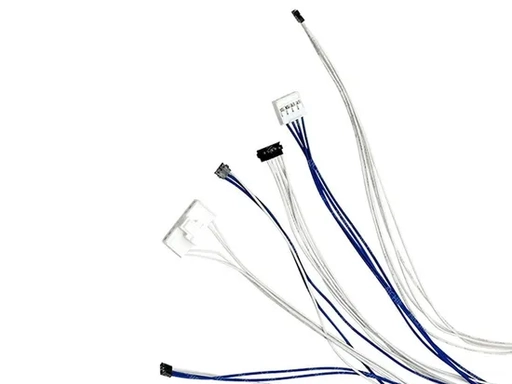
2. Current Carrying Capacity (Ampacity)
The current rating of a BMS cable assembly must match the electrical requirements of the battery system.
A reliable supplier should evaluate:
- continuous operating current;
- peak current conditions;
- installation environment;
- allowable temperature rise.
It is recommended to include an appropriate safety margin rather than designing exactly at the minimum requirement.
When sourcing, buyers should verify the actual copper cross-sectional area, rather than relying only on the AWG label.
Some low-cost suppliers may use smaller copper conductors while marking a larger wire specification, which can result in overheating during long-term operation.
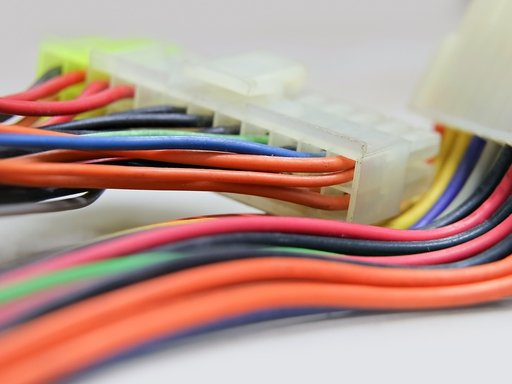
3. Insulation Material and Voltage Rating
Insulation performance directly affects electrical safety and environmental durability.
Common insulation materials include:
XLPE (Cross-linked Polyethylene)
Advantages:
- excellent thermal stability;
- strong insulation performance;
- long service life.
Suitable for:
- energy storage systems;
- industrial battery applications.
Silicone Rubber
Advantages:
- excellent high and low temperature resistance;
- flexible under extreme conditions.
Typical applications:
- outdoor ESS cabinets;
- harsh environmental installations.
Flame-retardant PVC
Advantages:
- cost-effective;
- suitable for indoor applications.
When selecting insulation, always confirm:
- system voltage;
- operating temperature;
- installation environment;
- required safety certifications.
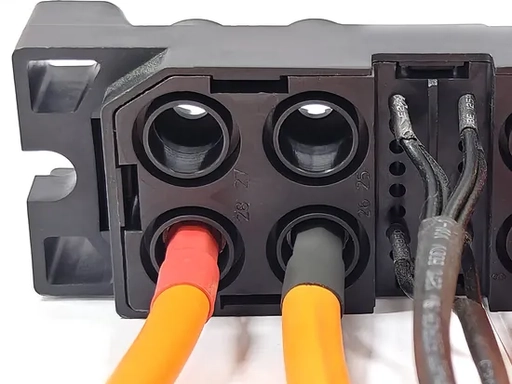
4. Temperature Resistance and Environmental Adaptability
Lithium battery systems experience temperature changes during operation, especially in outdoor installations.
A suitable BMS cable assembly should maintain stable performance under:
- continuous heating and cooling cycles;
- high-temperature operation;
- low-temperature environments.
Typical requirements:
Indoor residential ESS:
-20°C to 105°C
Commercial ESS and power battery applications:
-40°C to 125°C or higher depending on system requirements.
The insulation material should maintain:
- flexibility;
- dielectric strength;
- mechanical integrity;
without cracking, hardening or degradation.
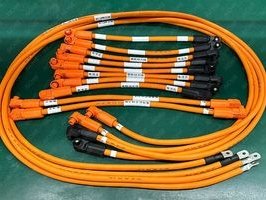
5. Flame Retardancy and Regulatory Compliance
For lithium battery applications, safety compliance is a key purchasing requirement.
Depending on the market and application, buyers should evaluate:
- UL94 flame rating;
- RoHS compliance;
- REACH compliance;
- customer-specific environmental requirements.
For automotive applications, suppliers may also need to support automotive quality management systems such as:
- IATF 16949.
For enclosed battery systems, flame-retardant and low-smoke materials can further improve safety performance.
6. Connector Selection and Contact Reliability
In many harness systems, connectors are one of the most critical reliability points.
A high-quality connector should provide:
- stable electrical contact;
- low contact resistance;
- strong vibration resistance;
- reliable mating cycles.
Important factors include:
Contact design
Precision contact structures can improve:
- electrical stability;
- vibration resistance;
- long-term connection reliability.
Crimping quality
Poor crimping can cause:
- increased resistance;
- localized heating;
- intermittent connection failures.
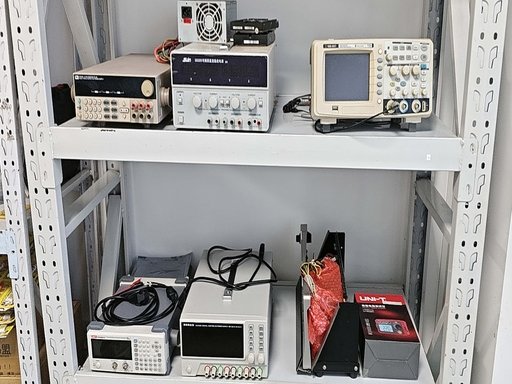
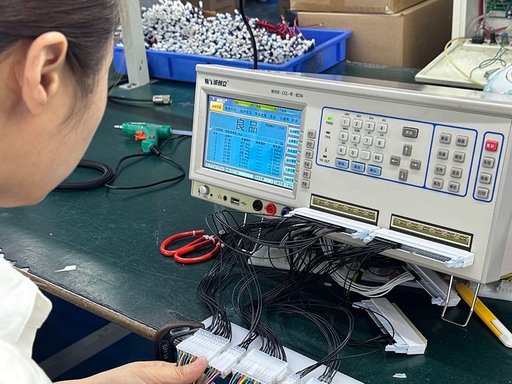
A professional harness manufacturer should control:
- terminal selection;
- crimp height;
- pull force;
- electrical testing.
7. Mechanical Durability and Long-Term Reliability
BMS harnesses are expected to operate throughout the battery system lifecycle, which may reach 8–15 years depending on application.
Key evaluation factors include:
Outdoor applications:
- UV resistance;
- moisture protection;
- corrosion resistance.
EV and mobile applications:
- vibration resistance;
- mechanical stress resistance;
- bending durability.
Prototype validation and reliability testing are essential before mass production.
Choosing the Right BMS Harness for Different Applications
Different battery systems require different harness designs.
There is no universal BMS cable assembly solution.
Residential Energy Storage Systems
Application characteristics:
- low to medium voltage;
- indoor or residential installation;
- high safety requirements;
- cost-sensitive projects.
Recommended solution:
- tinned copper sampling wires;
- flame-retardant insulation;
- reliable low-voltage connectors;
- customized harness length and configuration.
Key focus:
Safety, consistency and cost efficiency.
Commercial & Industrial Energy Storage Systems
Application characteristics:
- high voltage;
- outdoor installation;
- continuous operation;
- demanding environmental conditions.
Recommended solution:
- high-performance insulation materials;
- waterproof connectors;
- UV-resistant cable jackets;
- customized power and signal harness solutions.
Key focus:
Long-term reliability, environmental resistance and traceability.
Electric Vehicle Power Battery Systems
Application characteristics:
- strong vibration;
- wide temperature range;
- strict automotive requirements.
Recommended solution:
- automotive-grade conductors;
- vibration-resistant connectors;
- temperature-resistant insulation;
- manufacturing under automotive quality systems.
Key focus:
Safety, durability and automotive-grade reliability.
4 Common Mistakes When Purchasing BMS Cable Assemblies
1. Choosing the Cheapest Supplier
Low-cost suppliers often reduce cost through:
- smaller copper conductors;
- lower-grade insulation;
- uncertified connectors.
The result may be:
- overheating;
- signal instability;
- premature failure.
Always evaluate technical capability, not only price.
2. Checking Only the Final Product Certificate
A complete harness certificate does not always guarantee every component is reliable.
Always verify:
- connector quality;
- terminal materials;
- insulation specifications;
- supplier traceability.
3. Ignoring Application Environment
A harness designed for indoor applications may fail when installed outdoors.
Before production, confirm:
- temperature range;
- humidity;
- vibration;
- waterproof requirements;
- chemical exposure.
4. Skipping Prototype Validation
BMS harnesses are highly customized components.
Mass production without prototype testing may cause:
- connector mismatch;
- incorrect dimensions;
- signal problems;
- installation difficulties.
A professional supplier should provide samples for electrical and mechanical validation before mass production.
Partner with an Experienced BMS Cable Assembly Manufacturer
Selecting the right BMS cable assembly requires more than choosing a standard product. It requires a complete understanding of:
- battery architecture;
- voltage requirements;
- installation environment;
- connector compatibility;
- regulatory standards.
Working with an experienced harness manufacturer helps reduce design risks and improve product reliability from the early development stage.
Dongguan Huawang Electronic Technology Co., Ltd. (Hualink Cable) is a professional wire harness and precision connector manufacturer with more than 20 years of experience serving energy storage, lithium battery and new energy industries.
We provide customized solutions including:
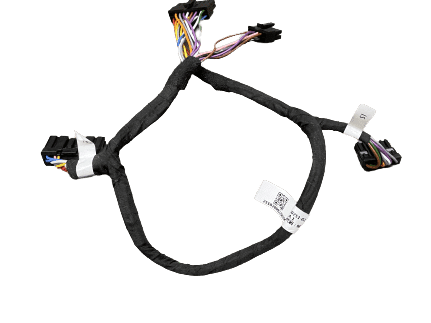
- BMS sampling harnesses;
- battery wiring harnesses;
- high-current energy storage cables;
- customized connector assemblies.
Our capabilities include:
- Certified quality systems: IATF 16949:2016, ISO 9001, UL, VDE and CCC certifications;
- Advanced connector technology: precision terminal and contact solutions designed for low resistance and high reliability;
- Complete customization service: from engineering design and prototype development to mass production;
- Strict quality inspection: including conductor resistance testing, insulation testing, flame retardancy testing and reliability validation.
Whether you are developing residential ESS products, commercial energy storage systems or electric vehicle battery solutions, our engineering team can provide a customized BMS cable assembly solution tailored to your technical and compliance requirements.
Contact us today for professional consultation and a customized quotation.